
The truth behind the track: The hidden reality of declining greyhound care
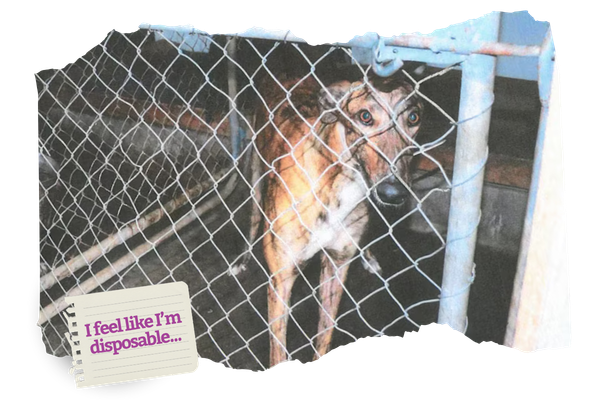
Greyhounds carry a long list of myths on their narrow shoulders, most of them shaped by the racing industry rather than the dogs themselves.
It’s a reassuring thought to believe that every racing greyhound is cared for like an elite athlete. That they live in safe, comfortable conditions, with proper nutrition, socialisation, enrichment, and attention to both their physical and mental wellbeing.
For some dogs, that may be true. But for many others, that simply isn’t the case.
Myth: “All racing greyhounds are well looked after”
Within the racing industry, the level of care a greyhound receives is often closely linked to performance. Dogs who are winning and generating income are more likely to receive consistent feeding, socialisation, veterinary treatment, and structured care.
But when a dog slows down, is injured, or stops winning, their value within the system can decline, and with it, the level of care they receive. They become a financial burden to their trainers.
At present, Greyhound Racing SA does not have a comprehensive, transparent birth-to-death tracking system. This means there is no consistent public record of where all greyhounds go, or what ultimately happens to them once they are no longer considered viable for racing.
What the South Australian inquiry revealed
The 2023 South Australian Inquiry into Greyhound Racing identified a number of serious welfare concerns that directly contradict the perception that all racing greyhounds are well cared for. It documented concerns, including:
Minimum kennel sizes as small as 1 metre wide and 2.4m
Inadequate protection from weather and pests
Lack of clean, elevated bedding
Issues with general cleanliness and hygiene of the kennels
Accumulation of waste, including faeces and urine, in some facilities.
These findings highlight that not all greyhounds are kept in conditions that meet acceptable welfare standards.
In addition to the above, some greyhounds have been reported to spend up to 23.5 hours a day confined, with limited enrichment and minimal human interaction. That’s not a normal life for a dog.
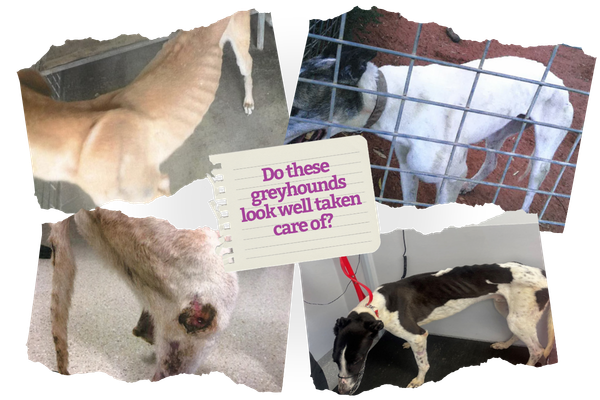
Beyond the track
For greyhounds who do not race successfully, the outlook can be even more uncertain. Caring for a non-performing dog comes at a cost, and without financial return, some animals may receive a lower standard of ongoing care.
Many greyhounds also leave the industry with limited exposure to everyday life, including living in a home, interacting with a variety of people, or encountering other types of pets. While some adapt well, others experience ongoing behavioural challenges that can make rehoming difficult.
There is no doubt that some greyhounds are well cared for. But the available evidence shows this is not the case for all.
Recent polling found only 16% of South Australians believe the racing industry provides greyhounds with an acceptable standard of welfare.
Until there is evidence that every greyhound has safe living conditions, a good standard of care throughout their life, transparent tracking from birth to death, and a genuine opportunity for a positive life beyond racing, the claim that all racing greyhounds are well looked after cannot be supported.
Urgent change is needed. It should be mandatory to publish lifecycle data, with relevant statistics collated. And greyhound welfare audits should be independent, with rehoming and end of career oversight strengthened.
Rest In Peace – Scott Crush
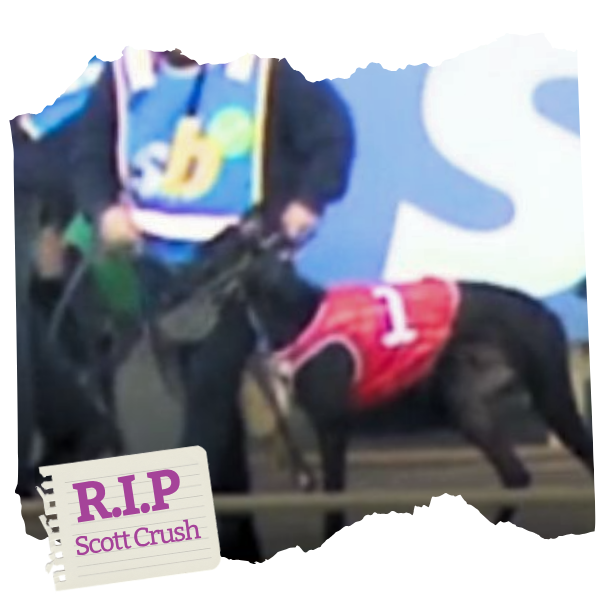
And then there are individual stories that cut through the statistics.
Scott Crush fractured his hock while racing at Shepparton on 13 April but continued running and finished the race.
Afterward, the on‑track veterinarian euthanased him, even though the stewards’ report did not describe the injury as comminuted (shattered) or compound – the usual criteria for on‑track euthanasia.
His death is part of a worrying pattern: 21 greyhounds have died in Victorian racing in 2026, mostly from broken legs, with none officially labelled as compound fractures.