
71% call it a hobby. So why are we calling it an employer?
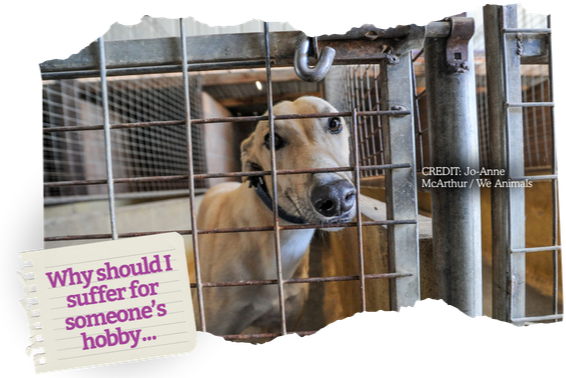
One of the most common arguments for keeping greyhound racing is that it creates jobs, but industry figures tell us a different story.
According to the 2023 Ashton Inquiry into SA’s Greyhound Racing industry…
71% of trainers participate as a hobby
and a further 22% are involved as a family activity.
And just 6% are involved in greyhound racing as a business.
Greyhound Racing SA's 24/25 annual report lists 233 registered trainers and 784 breeders and owners combined.
That suggests we're looking at approximately 60-70 people in SA who rely on greyhound racing as a primary income.
The industry's own numbers tell a damning story. According to Greyhound Racing SA's annual reports, between 2021/22 and 2024/25:
The number of trainers fell by 11% (262 → 233).
The number of breeders fell by 14.5% (151 → 129).
And the number of owners fell by a staggering 44.1% (1,172 → 655).
This isn't an industry on the rise. It's an industry in freefall.
The people closest to greyhound racing, those with the most invested, are choosing to leave. They can see what's coming.
So when the industry claims it's a vital source of jobs and economic growth, we have to ask: growth for whom? And for how long?
Because the data paints a picture not of a thriving, growing industry - but of one gasping for relevance, propped up by public money while its own participants abandon ship.
The "jobs" argument is often used to justify an industry that continues to injure and kill dogs on racetracks, and which rejects large numbers of dogs without guaranteeing them a safe home.
But when only 6% of participants rely on racing as their main income, it's hard to argue economic concerns should outweigh animal welfare.
Any transition should support those whose livelihoods are affected. But most South Australians would agree no animal should suffer so others can enjoy a hobby.
The question is whether that small economic impact justifies allowing dogs to continue paying the price. For many South Australians, the answer is becoming increasingly clear.
Want to help advocate for meaningful change?
Join our Changemakers community join the call for a responsible phase out of greyhound racing in South Australia.
Rest In Peace – Aniseed Ball
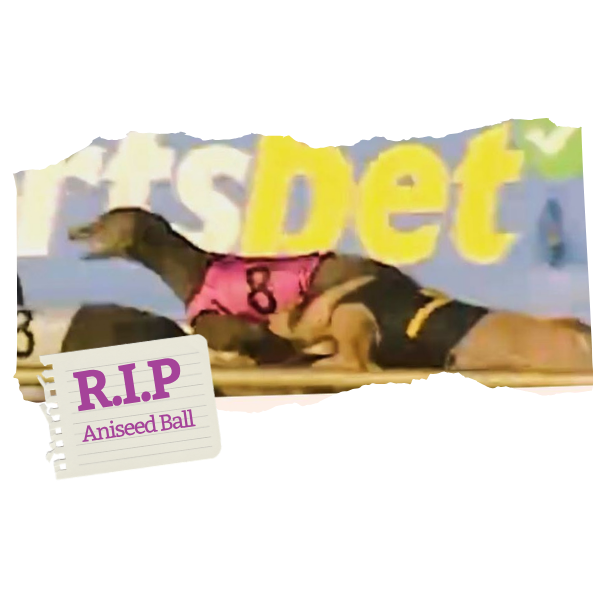
Image: Coalition for the Protection of Greyhounds
And then there are individual stories that cut through the statistics.
On 26 June at the Sportsbet Horsham Cup, young Aniseed Ball lined up for his very first race.
He fell at the notorious first turn, shattered his leg, and was killed by the industry vet before he ever made it home.
He is the 40th dog to die on Victoria's Sportsbet tracks this year alone.
Another life lost. Another dog whose final moments were spent in fear and agony.